The $1 Million Question: Why AI Real Estate Platforms Optimize for the Wrong Outcome
April 1, 2026
April 1, 2026
Here's the (real life) scenario.
A Pacific Heights condo lists for $2,395,000, in line with pricing models. The agent works their magic during 10 days of private showings, open houses, broker's tours, and twilight tours. A bid date is set. Nine offers come in. After a day of negotiations, the listing agent has now pushed the price to $3.4 million. The home ends up closing at that price to an all-cash, 7-day-close, contingency-free buyer.
That million-dollar delta didn't come from an algorithm. It came from a human being who understood something no model can quantify: the psychological state of nine competing buyers in a room where losing felt worse than overpaying.
This is the conversation nobody in proptech wants to have right now.
A new wave of AI-enabled real estate transaction platforms is coming more into the limelight in 2026, and on paper, the pitch is compelling. Pay a flat fee of a few thousand dollars, let an AI agent handle the HOA paperwork, buyer vetting, and digital showings, and skip the traditional commission entirely. For a $2 million home, you're looking at saving $50,000 or more. That math is hard to argue with, which is exactly why so many sellers stop doing math right there.
The problem is they're looking at the wrong side of the ledger. Sellers naturally view commission as a tax on their existing equity rather than an investment in their final proceeds. These platforms anchor their entire value proposition on that fixed fee, and for a seller, a known $4,500 loss feels psychologically safer than a variable $50,000 "expense". They prioritize cost certainty over revenue optimization. In the case of that $3.4 million close, the "savings" from a flat fee would have cost the seller nearly a million dollars in unrealized gain.
So where does the gap come from? It starts with something you could call the commodity trap. In a strong market, there's a pervasive myth that a home "sells itself" once it hits the MLS and Zillow. Flat-fee platforms feed this narrative by marketing real estate as a utility, like electricity or the internet. If a seller believes their home is a commodity, they'll naturally look for the cheapest way to ship that commodity to a buyer. But a high-end home in San Francisco or Marin is not a commodity. It's a unique asset that requires a bespoke auction environment to find its true ceiling.
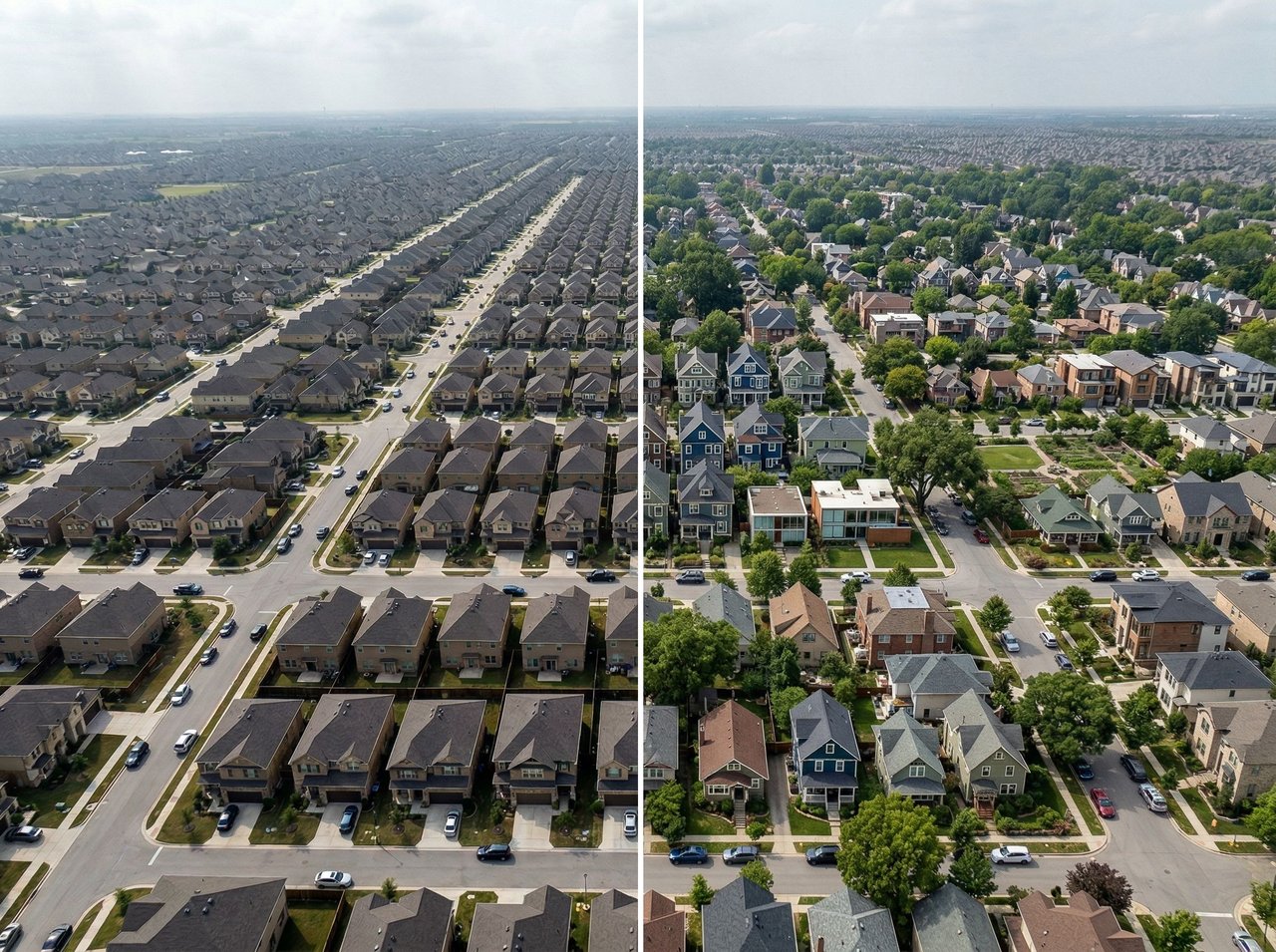
The real distinction comes down to price elasticity. In a suburban tract where 500 identical homes have sold in the past year, price elasticity is low. The market has reached consensus. In that environment, an algorithm can be fairly accurate because it's essentially running regression analysis on a stable data set. But in markets with price elasticity, where scarcity and emotional resonance drive outcomes, the price isn't a fixed point on a graph. It's a spectrum of possibilities, and the final number depends on the skill of the agent and the psychological state of the outlier buyer, not the aggregate data of the median one.
This is where the March Madness analogy becomes almost too perfect. This month, several major outlets ran experiments feeding the full NCAA tournament bracket into AI models. The Daily Wire gave the field to ChatGPT, Claude, Gemini, and Perplexity. All four converged on Duke as champion. They essentially "priced" Duke as a low-volatility asset. Then on Sunday, Duke got knocked out by UConn after blowing a significant lead. The AI couldn't account for the psychological tilt or the momentum shift of a 19-point comeback. Because all the models were looking at the same trailing data and the same KenPom metrics, they all made the same "rational" pick and they all missed the outlier event.
That outlier event is exactly where the million-dollar delta lives in real estate.
AI has largely solved the problem of asymmetric information. Everyone now has access to the same data, the same comps, the same market reports. But the alpha has shifted to what you might call asymmetric emotion. An AI transaction platform can tell a seller what a unit in the same building sold for six months ago. It cannot tell a seller that three of the nine buyers who toured the listing are currently panic-buying because they just lost out on a different property nearby and are willing to stretch 30% beyond what any algorithm would predict. AI optimizes for the median outcome. A skilled agent optimizes for the outlier outcome.
There's also an irony buried in how these platforms handle the transaction itself. When you generate multiple competitive offers, you're creating a social proof loop. Buyers aren't just bidding on a home; they're bidding against the validation of eight other people. Automated buyer vetting and sterile digital scheduling actually remove that social friction, which can lower the final price by making the entire process feel too clinical. Sometimes the "inefficiency" of the human process is the feature, not the bug.
None of this means AI-enabled transaction platforms are worthless. For a straightforward sale in a commoditized market where hundreds of comparable transactions have already established an extremely tight price band, the math can work. The question every seller needs to ask before choosing their approach is simple: how much price elasticity exists in my specific market? If the answer is "none," save the commission. If the answer is "some" or "a lot," then the agent's commission isn't a cost, it's an investment. It's the mechanism that captures value you'd otherwise leave on the table. But you have to find the right agent - a topic for another day.
The AI brackets scored respectably this March, hitting ~75% of first-round games and landing 10 to 13 of Sweet Sixteen teams. Solid but not superior to top human bracketologists. That's the right analogy for where we are in real estate. AI is better than average, but "better than average" is a dangerous standard when you're selling the most expensive asset most people will ever own.
Stay up to date on the latest trends

September 9, 2026
Technology That Makes Daily Living Easier, More Efficient, and More Connected

August 24, 2026
Your insider guide to what’s happening on both sides of the bridge!

News
August 21, 2026
Inside the creative financing strategies reshaping Bay Area homebuying

News
August 13, 2026
How wellness, longevity, and resilience are reshaping what Bay Area buyers want at home.

July 27, 2026
Your insider guide to what’s happening on both sides of the bridge!

July 21, 2026
From global flagships to boutique debuts, here's what just opened and what's coming next.
News
July 19, 2026
Why buyers have more leverage in some markets while competition continues to intensify in others.

News
July 9, 2026
What the next wave of AI wealth could mean for the city's housing market.

June 23, 2026
Your insider guide to what’s happening on both sides of the bridge!
From strategy to sold
The Binnings Team is one of the Bay Area's most successful agent teams, consistently ranked among the top-performing agents in San Francisco and Marin. Whether you're buying or selling a home, we can help you get the most for your investment.