The Supply Squeeze Is Real, and the Tsunami Hasn't Even Arrived Yet
March 18, 2026

March 18, 2026
I was running numbers this morning ahead of a conversation with the San Francisco Chronicle, and the data confirmed what we've been feeling on the ground for weeks: San Francisco's housing market is tightening. Fast.
From January 1 through March 13, just 1,363 residential properties hit the market in San Francisco this year. During the same period in 2025, that number was 1,544. That's a 12% decline in new listings, year over year. Closed transactions tell a similar story: 685 closings so far in 2026 versus 754 last year, a drop of about 9%.
The headline here isn't that the market is slowing down. It's the opposite. We have contracting supply colliding with accelerating demand, and that dynamic is creating real pricing pressure across the city.
The fuel right now is liquidity. Specifically, liquidity generated through secondary sales. Employees at late-stage private companies have been selling shares on the secondary market, converting years of equity compensation into real capital. Some of that money is entering the housing market today, and it's showing up in the form of multiple offers, compressed days on market, and escalating prices that feel reminiscent of 2021.
But here's the part that should get everyone's attention: the secondary market is the appetizer. The main course is the IPO wave that's building on the horizon.
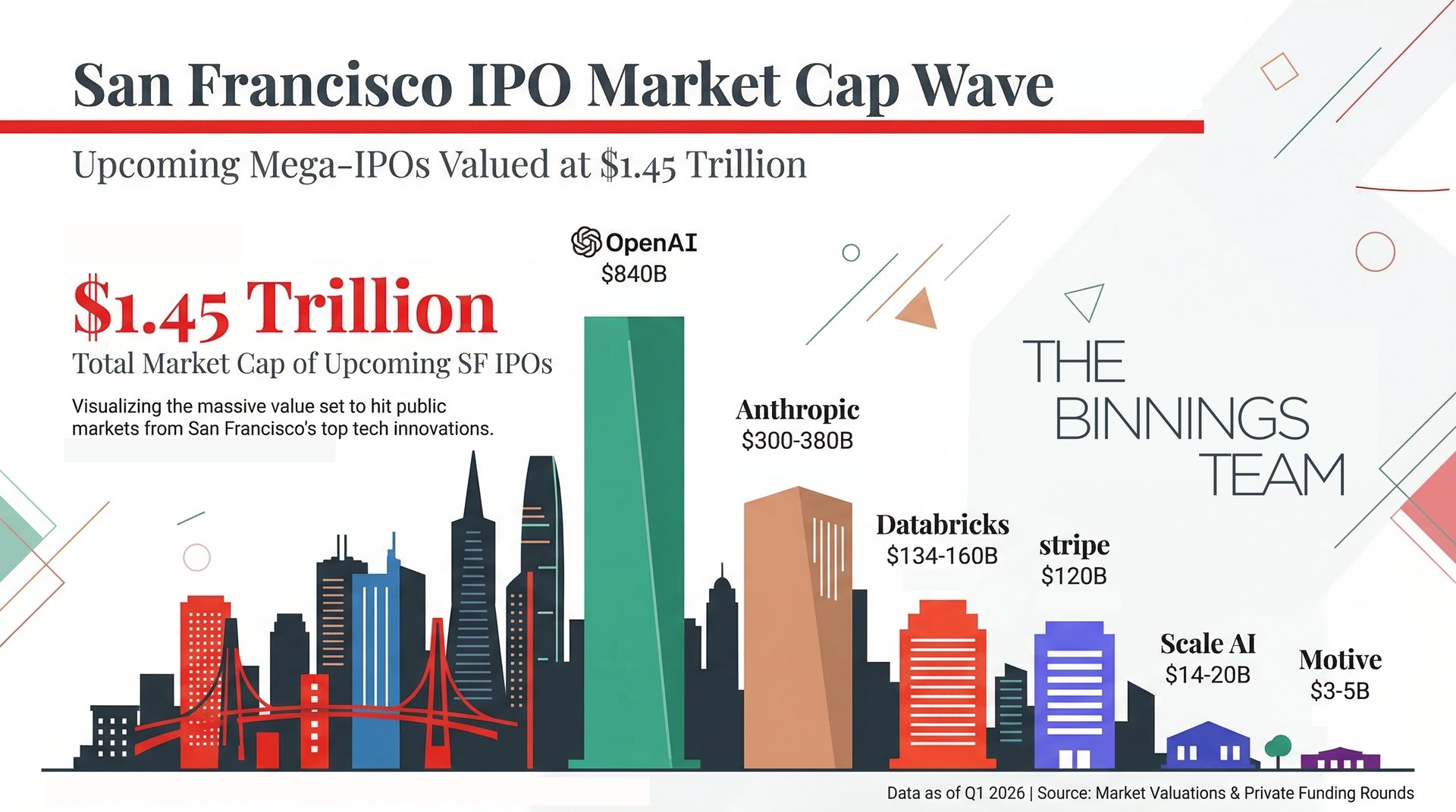
Based on current private valuations and public filings, over $1.5 trillion in newly created market capitalization could flow into the San Francisco and Greater Bay Area economy over the next 12 to 36 months through companies like Anthropic, OpenAI, Databricks, Stripe, and others. Now, the vast majority of that is enterprise value, not housing dollars. But even a small fraction of $1.5 trillion, when it lands in a supply-constrained housing market, translates to tens of billions of dollars in potential real estate demand.
And the IPO window? It hasn't even opened yet in earnest. When it does, and when the subsequent lockup periods expire, we could be looking at a three-to-six-year runway where this dynamic intensifies.
This is the question I keep getting asked, and I think the answer is straightforward: sellers are doing the math.
Part of it is the mortgage rate lock-in effect. Homeowners who locked in 10-year or 30-year fixed rates during the low-rate era have no financial incentive to move. The five-year adjustables are starting to reset, which has loosened up a small sliver of supply, but the vast majority of locked-in homeowners are sitting tight. And they will be for years.
The other factor is anticipation. Savvy homeowners in San Francisco understand that a liquidity tsunami is building. They're looking at the IPO pipeline and thinking: why would I sell now when the peak demand hasn't arrived? They know things are improving, but they also know this might not be the top. So they hold, which further compresses supply, which further drives prices. It's a self-reinforcing cycle.
One of the most encouraging signals I'm tracking is the broadening of the recovery. For the past year or so, the strength was concentrated at the higher end: luxury properties, premium neighborhoods. The lower tiers were still feeling the hangover from what I'd characterize as a market trough in 2023, with marginal improvement in 2024 and 2025.
Now, heading into spring 2026, we're seeing real movement across the full spectrum of property types and price points. Starter homes, mid-market condos, single-family homes in emerging neighborhoods. The rising tide is starting to lift more boats. That's a sign of a healthy, structural recovery rather than a narrow luxury phenomenon.
I spend a lot of time studying public equities, and one of the most interesting trends I'm watching is the capital rotation happening under the surface. After a three-year run-up in tech we're seeing investors take some chips off the table and rotate into defensives, commodities, and increasingly, real estate.
The logic is simple. After the volatility we saw in April 2025, a lot of shareholders don't want to be caught in another drawdown with 100% tech exposure. But cash isn't an option. With inflation where it is, sitting in cash is holding a melting ice cube. That capital has to find a new home. And real estate, which was out of favor for the past few years, is emerging as a compelling rotation destination.
If this rotation continues (and I suspect it's part of a secular trend, not just a blip), it creates yet another demand tailwind for San Francisco housing, layered on top of the secondary sales and the coming IPO wave.
The thesis is intact, but it's not without risks. The next twelve months will be defined by a few key variables. First and foremost - oil. Will rising prices remain sticky, which would create more inflation and slow economic growth (which could delay rate cuts and the expected IPO window)?
How deep will the rotation out of tech go if investors continue de-risking and rotating capital? And where does the bottom form before software and tech find their footing again? How much of the AI boom is self-cannibalizing - that is, comes at the expense of other Bay Area companies?
For now, the data is clear: supply is compressing, demand is accelerating, and the biggest catalysts are still ahead of us. If you're a seller debating timing, the leverage is already in your hands, but also, know things can change on a dime. And if you're a buyer, the math is straightforward. The competitive landscape will probably intensify from here, with fits and starts, of course.
--
Arrian Binnings is a founding member of The Binnings Team at Christie's International Real Estate, specializing in San Francisco, Marin County, and Wine Country luxury real estate. With over 20 years of experience and a background in appraisal, Arrian brings a data-driven, cycle-aware approach to advising clients across the Bay Area's most sought-after micro-markets.
Stay up to date on the latest trends
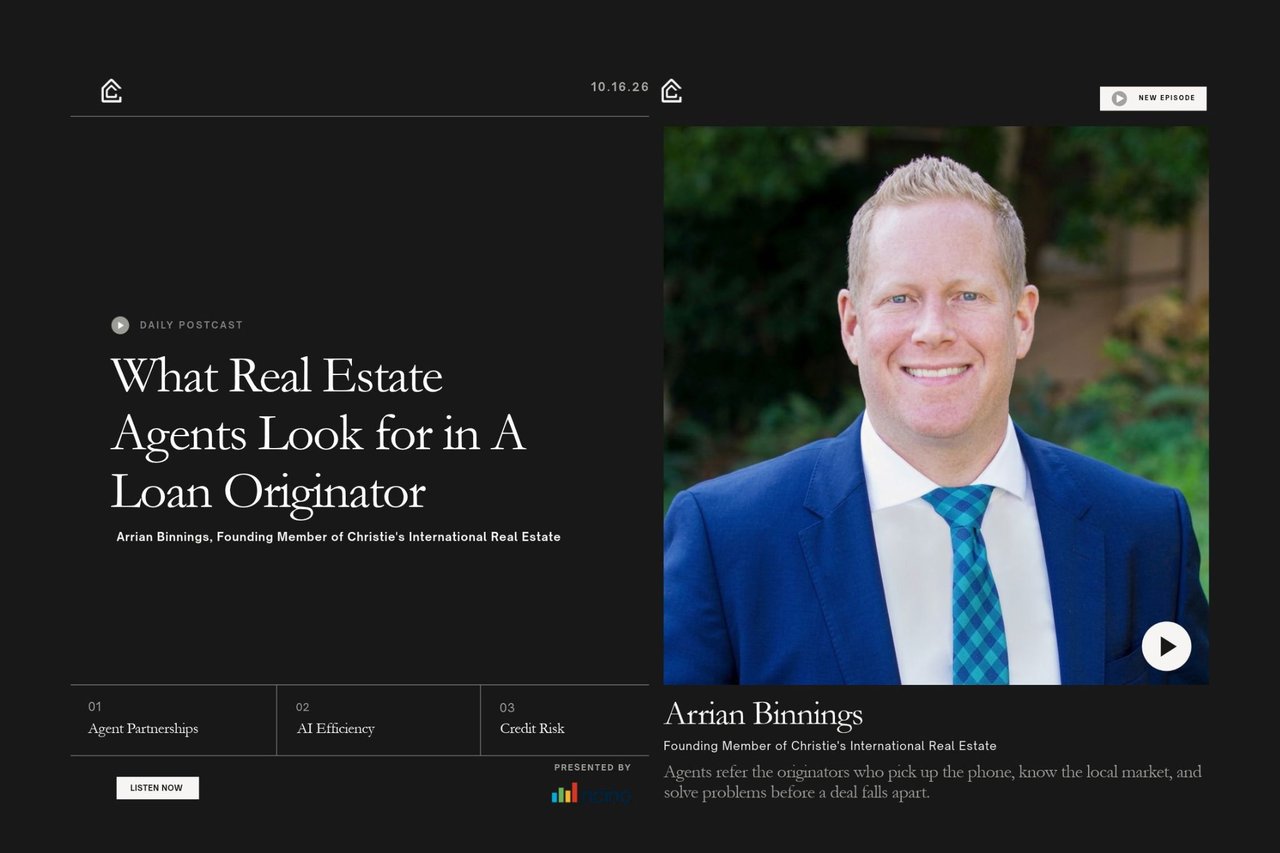
October 16, 2026
Arrian joins Robbie Chrisman on The Chrisman Commentary to talk trust, local nuance, and the parts of real estate no algorithm can touch.

October 7, 2026
Smart financing starts well before you find the right home.

September 22, 2026
Your insider guide to what’s happening on both sides of the bridge!

September 9, 2026
Technology That Makes Daily Living Easier, More Efficient, and More Connected
August 24, 2026
Your insider guide to what’s happening on both sides of the bridge!

News
August 21, 2026
Inside the creative financing strategies reshaping Bay Area homebuying

News
August 13, 2026
How wellness, longevity, and resilience are reshaping what Bay Area buyers want at home.

July 27, 2026
Your insider guide to what’s happening on both sides of the bridge!

July 21, 2026
From global flagships to boutique debuts, here's what just opened and what's coming next.
From strategy to sold
The Binnings Team is one of the Bay Area's most successful agent teams, consistently ranked among the top-performing agents in San Francisco and Marin. Whether you're buying or selling a home, we can help you get the most for your investment.